
The Setup: Humanoid Robot Stocks
The first big humanoid IPO jumped 460% on day one. Six weeks later, it had lost nearly half its value.
That's Unitree, the Chinese robot maker that listed in Shanghai in August. Nothing broke at the company in those six weeks. The market priced the dream on day one and the business by week six.
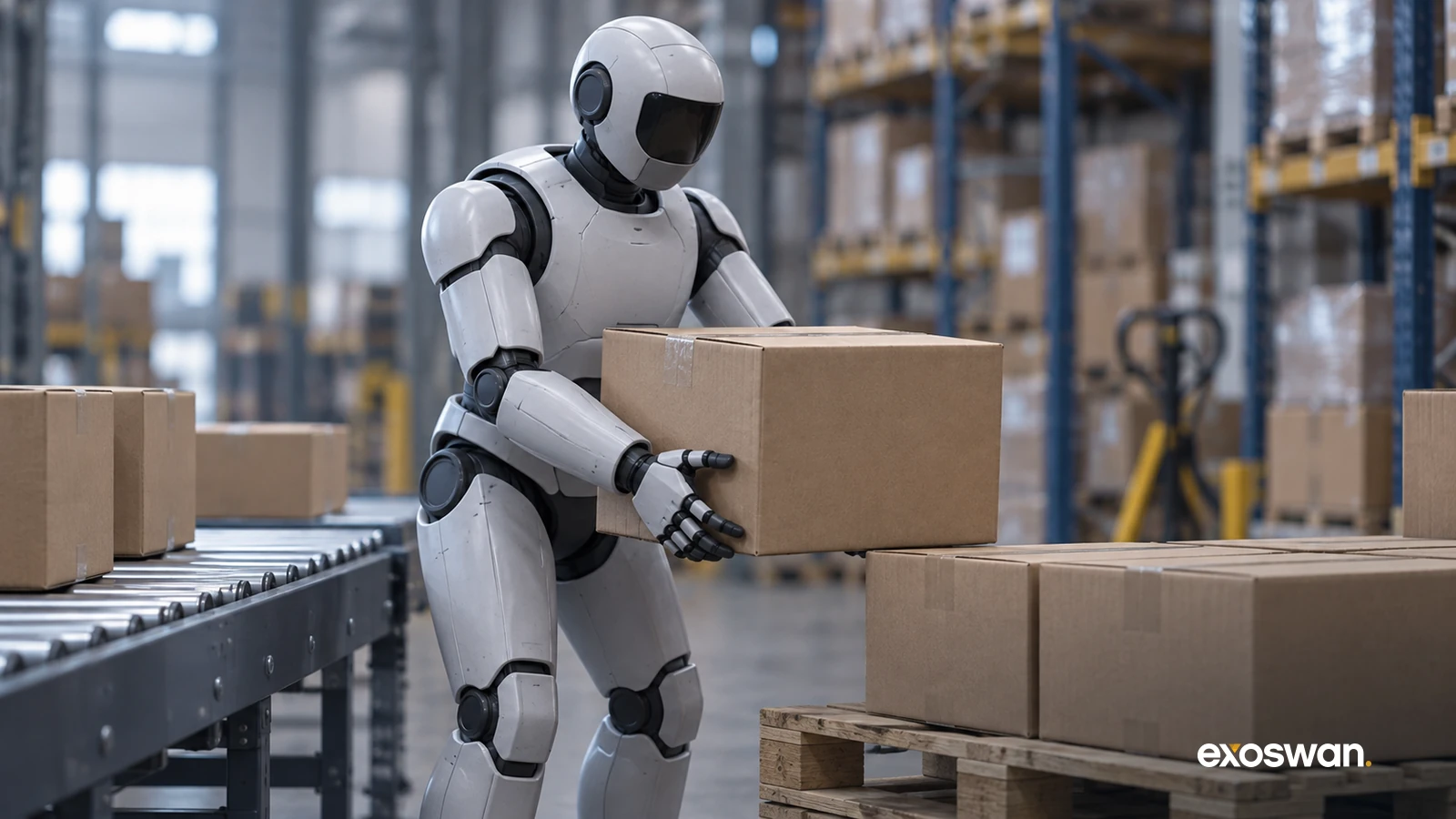
The dream is easy to see. A humanoid robot is built in the shape of a person so it can work in places built for people: assembly lines, warehouses, and eventually kitchens. You don't rebuild the plant around the robot, which is why automakers, Amazon, and every AI lab want in. The business is real now, too. Shipments nearly quadrupled in the first half of 2026. Agility's Digit moves boxes for GXO, Figure's robots work a BMW line, and UBTech sold more than 900 full-size humanoids in six months.
The catch is who's building them. Chinese companies made more than 97% of the humanoids shipped in the first half, and the leader isn't even Unitree anymore. It's AgiBot, which is still private. Beijing is also reportedly making it harder for humanoid startups to go public without real revenue. The hype phase is ending in the country that actually builds these things.
A humanoid is three businesses bolted together, and humanoid robot stocks split the same way, with very different economics:
- Bodies: the robot makers. Real revenue, falling prices.
- Brains: the AI models and compute that make a body useful.
- Joints: the gears and magnets inside every actuator.
- Private: the best-funded names you can't buy yet.
Companies at a glance
13 companies| Company | Ticker | Segment | Thesis |
|---|---|---|---|
| Unitree Robotics | SHA: 688836 | Bodies | The sector's price check, and profitable |
| UBTech Robotics | HKEX: 9880 | Bodies | Factory humanoid revenue, finally at scale |
| Agility Robotics | NASDAQ: CCXI → AGLT (pending) | Bodies | The first US-listed pure-play, already paid for one job |
| Tesla | NASDAQ: TSLA | Bodies | The West's only shot at Chinese volume |
| Hyundai Motor | KRX: 005380 | Bodies | Controls Boston Dynamics and is its first customer |
| Rainbow Robotics | KOSDAQ: 277810 | Bodies | Samsung's way into humanoids |
| Nvidia | NASDAQ: NVDA | Brains | Trains nearly every robot brain |
| Alphabet | NASDAQ: GOOGL | Brains | Wants to be the Android of robots |
| Harmonic Drive Systems | TYO: 6324 | Joints | The default gear in Western robot joints |
| MP Materials | NYSE: MP | Joints | The only Western mine-to-magnet supply |
| Figure AI | Private | Private | $39B, spending like an AI lab |
| AgiBot | Private | Private | The world's biggest humanoid shipper |
| 1X Technologies | Private | Private | The home-robot bet, about to get a price |
Bodies
The robot makers. Their revenue is real and growing fast, and their prices are about to fall just as fast.
Unitree Robotics SHA: 688836
Unitree is the market's price check on the whole theme. When it moves, every humanoid stock reprices with it, and in September it moved down hard, to an all-time low.
The business underneath is real. First-half revenue rose 48%, and Unitree turned a profit, which almost nobody else in this industry can say. But it's no longer the biggest shipper, and profit excluding one-off items fell 19% even as sales grew. It isn't eligible for Stock Connect yet, so most foreign investors can't buy it directly.
UBTech Robotics HKEX: 9880
For years UBTech sold mostly education and service robots while talking about humanoids. Now the humanoids are the business. Full-size humanoid revenue hit ¥590 million in the first half, about 15 times a year earlier, on 921 units. It still loses money, but group gross margin is near 45% and the loss narrowed 23%. This is the humanoid story with numbers attached.
Agility Robotics NASDAQ: CCXI → AGLT, pending
If you can't buy in Shanghai or Hong Kong, Agility is coming to you. Its merger with Churchill Capital Corp XI is expected to close this quarter and list as AGLT, which Agility bills as the first US-listed humanoid pure-play.
Agility picked one job, moving totes, and got paid for it before anyone else did. Digit has moved more than 100,000 of them in GXO warehouses, Amazon is both an investor and a customer, and the new Digit 5, unveiled in September and due to ship in the second half of 2027, already has more than $300 million of multi-year orders.
Tesla NASDAQ: TSLA
Tesla is the only Western company trying to build humanoids at the volume China does. The Information reported in late September that Optimus output in Fremont hit several hundred a week in August, with a line meant to pass 1,000 a week by year-end. Workers still assemble much of the hands, which tells you how far there is to go. Optimus is a small slice of a car-and-energy company, but it's the one Western program with a real shot at Chinese costs.
Hyundai Motor KRX: 005380
Most humanoid makers spend their time hunting for a customer. Hyundai is the customer. It's the biggest shareholder in Boston Dynamics, the most famous robotics lab in the world, and the Hyundai group is buying out SoftBank to take full control. In September Boston Dynamics opened a center at Hyundai's Georgia Metaplant to train Atlas on parts sequencing, with assembly work targeted by 2030. It has talked about putting tens of thousands of humanoids into its own plants. You get that inside an automaker priced like an automaker.
Rainbow Robotics KOSDAQ: 277810
Samsung owns about 35% of Rainbow Robotics, the Korean lab behind the HUBO robot, and runs it as a subsidiary. Samsung is reportedly preparing its own humanoid for CES 2027. Rainbow is the most direct listed bet that the world's biggest electronics manufacturer gets serious about robots, and the valuation already assumes it will.
Brains
A humanoid body is a motor problem. A useful humanoid is an AI problem, and that's where the US still leads.
Nvidia NASDAQ: NVDA
Nearly every humanoid that isn't a Tesla learns on Nvidia hardware, practicing tasks millions of times in simulation before it touches the real world. In September, Figure signed a deal with Nscale for up to 100,000 Nvidia GPUs, starting at $3.5 billion. That's what training a robot brain costs now. Nvidia doesn't even break out robotics revenue. If robot brains become the next big compute buyer, it collects either way.
Alphabet NASDAQ: GOOGL
Alphabet is betting robot brains end up like Android: one model, licensed to many bodies. Apptronik is building its Apollo robot around Google DeepMind's Gemini Robotics models, and Boston Dynamics has teamed up with DeepMind on Atlas.
If bodies get cheap, whoever supplies the brain to everyone else has the pricing power. Today it's a rounding error inside a search company, which keeps the bet cheap.
Joints
Every humanoid joint is a motor, a gearbox and a magnet, and each robot needs dozens of them. The suppliers get paid whichever body wins, which makes them the humanoid robot stocks least exposed to falling robot prices.
Harmonic Drive Systems TYO: 6324
Harmonic Drive makes the precision strain-wave gears inside high-end robot joints, and it's the default supplier for Western and Japanese builds. Chinese makers like Leader Drive are building cheaper versions, and Chinese robot makers mostly buy local. So this is a bet on Western humanoid volume specifically. If Tesla, Agility and Boston Dynamics ramp, Harmonic ramps with them.
MP Materials NYSE: MP
No rare-earth magnets, no motors. No motors, no robot. China makes most of the world's magnets, and MP Materials is building the only integrated mine-to-magnet operation in the Western Hemisphere, and expects its first commercial magnets to ship to GM this quarter.
Washington is already walling off foreign robots: in July the FCC added advanced robots made in any foreign country to its Covered List, which bars new models from approval. Every Western builder needs a non-Chinese magnet supply, and right now there's basically one address.
Private
The best-funded humanoid companies are still private. They set the prices the public humanoid robot stocks trade against.
Figure AI
Figure is the most valuable humanoid company in the world, last priced at $39 billion, with robots on BMW's line and Nvidia, Microsoft and Jeff Bezos on the cap table. Its real bet is the brain: an in-house model called Helix running on its own bodies. The Nscale compute deal tells you how it sees itself. Figure spends like an AI lab, not a hardware maker.
AgiBot
AgiBot is the humanoid leader most Western investors haven't heard of. It shipped about 8,400 humanoids in the first half, more than Unitree, for 44% of the global market. It's working toward a Hong Kong listing. When it lists, it'll be Unitree's first real comp.
1X Technologies
1X is the home-robot bet. Its NEO went on preorder at $20,000 in October 2025, and SoftBank has been in talks to buy a majority stake at about $6 billion, well below the $10 billion figure that had been floated. No customer delivery has been independently confirmed, and complex chores still lean on remote human operators. If the SoftBank deal closes, it's the first real price on a robot in your kitchen.
The Future of Humanoid Robots
Solar panels already ran this play. China built most of the world's supply, drove module prices down about 90% since 2010, and most Western panel makers went under. Electric-vehicle batteries followed the same path.
Humanoid bodies are already on that curve. China builds more than 97% of them, Unitree's cheapest humanoid launched at under $6,000 and has already been marked down, and a long line of Chinese rivals is queuing for IPOs to fund the next price cut. That's great news for anyone who wants to buy a robot, and bad news for anyone who wants to make money building one.
The margin moves to the part that doesn't commoditize: the brain. A robot that learns a new task from a few demonstrations is worth far more than one that needs engineers to program every motion, and that difference lives in models, data and compute, not motors. So in 2027, the humanoid robot stocks worth owning belong to companies that own the brain instead of renting it.
The bodies are about to get cheap. Bet on the brains.