
Every fighter jet screaming off a carrier deck, every hypersonic missile holding its shape at Mach 5, every artificial hip that lets grandmother walk again—they all depend on the same metal:
Titanium.
It’s as strong as steel but 45% lighter. It resists saltwater, shrugs off jet exhaust, and bonds with living bone as though it were part of you. No other element on the periodic table can do all three.
And yet, for decades, the Western world sourced most of its aerospace-grade titanium from a single Russian company, VSMPO-AVISMA. When Russia invaded Ukraine, Boeing cut ties. Airbus scrambled to diversify, reducing its Russian exposure to roughly 20%. Calls for formal sanctions on Russian titanium are now gaining serious momentum.
The race to re-shore and friend-shore titanium supply is the defining structural story in this market. This report highlights the top titanium stocks and private bellwethers to watch, grouped by their role in the value chain.
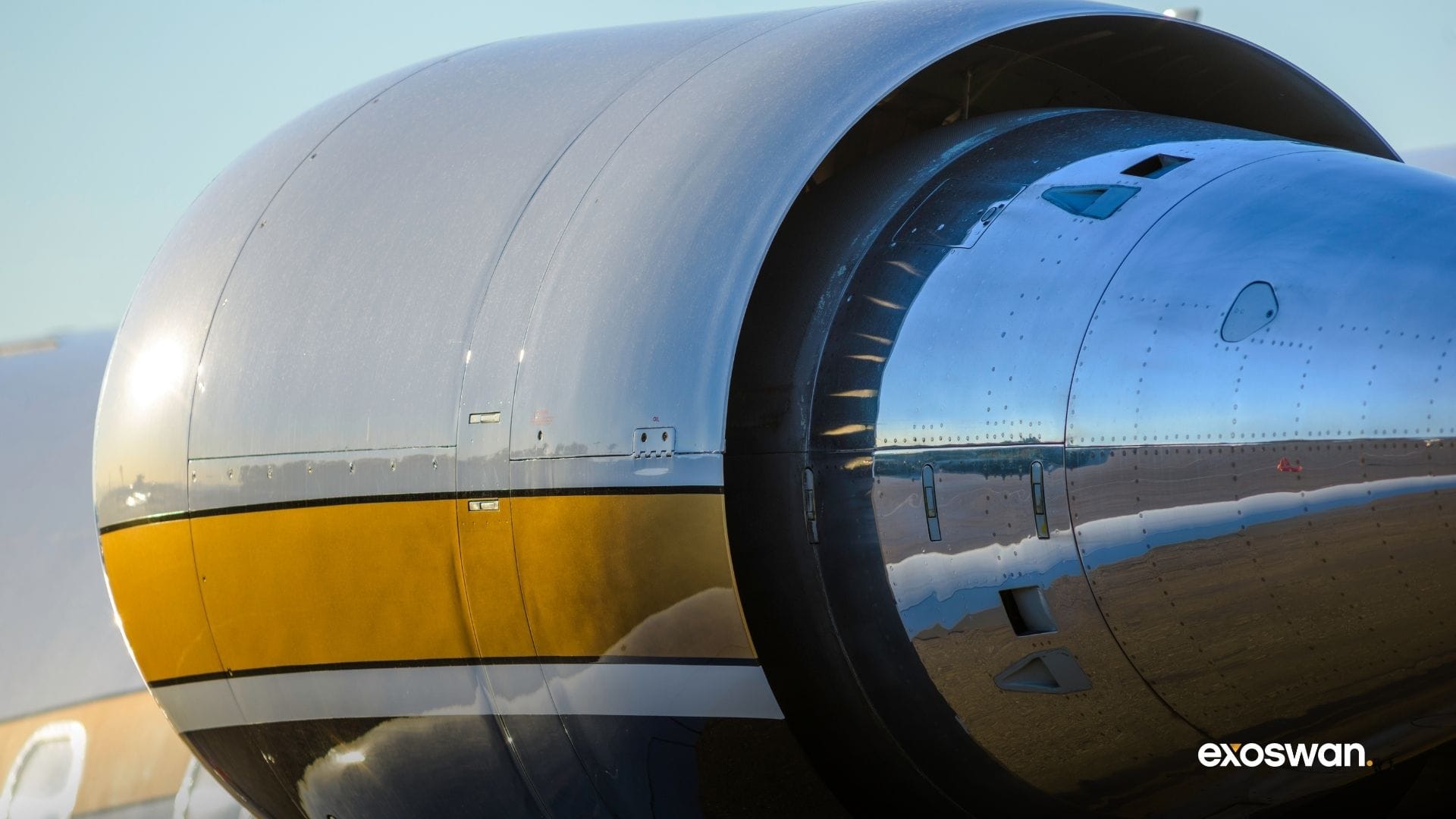
Why Titanium, Why Now?
Three demand drivers are converging for titanium.
- Aerospace is entering a supercycle. The global aircraft order backlog exceeds 17,000 planes, or over a decade of production. Each new-generation airframe uses more titanium than its predecessor because carbon-fiber composites are replacing aluminum, and titanium is the only structural metal that won't corrode when bolted next to carbon fiber.
- Hypersonics are moving from lab to production line. At speeds above Mach 5, air friction pushes skin temperatures past 600°C, beyond aluminum's working range but squarely in titanium alloy territory. The Pentagon allocated $3.9 billion to hypersonic research in FY2026.
- Medical implants remain a quiet compounder. Titanium's unmatched biocompatibility (bone literally grows into it) makes it the default material for hips, knees, and spinal rods.
The U.S. Geological Survey reaffirmed titanium in its 2025 List of Critical Minerals, signaling that government policy will increasingly support domestic production. Here’s who captures demand across the value chain.
Titanium Sponge Producers
Every titanium product starts as "sponge," a porous metallic lump cooked in a sealed reactor over four days. This is the industry's foundational bottleneck. The world has very few qualified producers, and new capacity takes years to build and certify.
- Toho Titanium (TYO: 5727) is the quiet cornerstone of the Western supply chain. It operates sponge plants in Japan and a Saudi joint venture, and is now considering a new facility in the U.S., Saudi Arabia, or Japan. Its current expansion—adding 3,000 MT/year by 2026—is modest relative to the supply gap, which is the key: sponge capacity is structurally scarce, and Toho is one of the few trusted sources.
- Osaka Titanium Technologies (TYO: 5726) is the world's second-largest sponge producer after VSMPO, running at near-full capacity. It has committed ¥30 billion ($191 million) to build a new plant in Amagasaki, lifting capacity from 40,000 to 50,000 tons per year, though the tonnage won't arrive until 2028–2029. Part of the Sumitomo Group.
Together, Japan's two sponge producers hold combined capacity roughly double Russia's VSMPO. As the West diversifies, Japan is becoming the fulcrum of the global titanium supply chain.
Melt, Mill & Forge
It takes massive capital (vacuum furnaces, forging presses, rolling mills) to turn sponge into the billet, plate, bar, and sheet that airframe and engine makers buy. These companies are protected by decades-long qualification moats: getting approved to supply titanium for a jet engine part is a years-long process that creates enormous switching costs.
- ATI Inc. (NYSE: ATI) may hold the single strongest hand in Western titanium. Full-year 2025 revenue reached $4.59 billion, with management guiding to $1 billion in adjusted EBITDA for 2026. ATI holds long-term supply agreements with both Boeing and Airbus (the latter more than doubling ATI's prior volumes), and recently brought online a new titanium alloy sheet facility in South Carolina. Its materials are on virtually every commercial platform flying today.
- Howmet Aerospace (NYSE: HWM) comes at titanium from the finished-parts end: forging, casting, and machining it into fasteners, structural forms, and engine hardware. Record 2025 revenue of $8.3 billion, up 11% year-over-year. Howmet is the blue-chip play in this space. It is also consolidating the fastener layer: in December 2025 it agreed to acquire Consolidated Aerospace Manufacturing for ~$1.8 billion (closing expected H1 2026), and in February 2026 it acquired Brunner Manufacturing.
- Carpenter Technology (NYSE: CRS) differentiates at the melt; its vacuum systems produce aerospace-grade titanium with the tight chemistries that engine programs demand. Full-year FY2026 operating income guidance was raised to $680–$700 million, roughly 32% year-over-year growth. Carpenter is also one of the few qualified producers of titanium powder for additive manufacturing, a small but fast-growing niche.
- TIMET (Precision Castparts / Berkshire Hathaway) is not directly investable but too important to omit. Producing titanium since 1950, TIMET supplies roughly one-fifth of the world's titanium and is the largest sponge producer and melter in North America. Investors get indirect exposure through Berkshire Hathaway (NYSE: BRK.B).
Fasteners & Finished Components
The bolts, rivets, and collars that physically hold an airplane together are low-dollar per unit but mission-critical, heavily qualified, and nearly impossible to switch out once designed into a build program.
- On March 16, 2026, PennAero completed its $1.45 billion acquisition of TriMas Corporation's entire aerospace business, backed by Tinicum and Blackstone. The combined entity operates brands like Monogram and Allfast, with proprietary titanium blind bolts and rivets tuned for composite-rich airframes. Privately held, but worth watching as a future IPO candidate, especially given the valuations Howmet's CAM deal implies for this niche.
Titanium Process Disruptor
The standard process for making titanium sponge is eighty years old. A new generation of companies is trying to break its cost curve.
- IperionX (NASDAQ: IPX) has developed patented technologies that can produce aerospace-grade titanium from recycled scrap or domestic minerals at significantly lower energy and cost. It has received $47.1 million in U.S. Department of Defense funding to scale its Virginia manufacturing campus, with a seven-fold expansion to 1,400 tons per year targeted for mid-2027, and recently received a prototype order from American Rheinmetall for U.S. Army ground combat components. Caveat: On March 13, 2026, IperionX disclosed a reporting error in its half-year financials. The stock fell roughly 27% over two days, and multiple securities law firms have opened investigations. No lawsuit filed as of this writing. High risk, but if the technology delivers on cost at full scale, it could reshape the industry.
Private Bellwethers
These companies are not available on public exchanges, but their trajectories matter as demand signals, IPO candidates, or acquisition targets.
- VSMPO-AVISMA (Russia) remains the elephant in the room—the world's third-largest sponge producer and historically the dominant supplier to Western aerospace. Not investable for Western portfolios, but its status is the single most important variable in this market: any formal sanction of VSMPO itself would instantly tighten global supply.
- Bahrain Titanium Industries (BTI) is developing a new aerospace-grade titanium complex in the Gulf—one of the few greenfield sponge projects outside Japan and Russia, positioned as a "friend-shored" alternative for European buyers.
- UKTMP (Kazakhstan) is a key sponge producer supplying both Western and Chinese markets. Kazakhstan's geopolitical non-alignment makes UKTMP a swing supplier whose orientation could shift with sanctions policy.
Signals to Watch
For investors tracking titanium stocks, these are the near-term signals that matter:
- VSMPO sanctions. Any formal U.S. or EU sanction on VSMPO would create an immediate supply shock and reprice every Western producer's margins upward.
- Boeing and Airbus build rates. Titanium consumption per aircraft is rising, but the absolute number of planes delivered is the volume multiplier. Boeing's 737 MAX recovery and Airbus's A320neo ramp to 75/month are the key gauges.
- Hypersonic procurement. As programs like LRHW, HACM, and CPS transition from R&D to production, demand for defense-grade titanium will step-change higher.
- Japan's capacity expansion. Toho and Osaka are investing hundreds of millions in new sponge capacity, but the tonnage arrives gradually (2026–2029). The gap between demand and supply is where pricing power lives.
- IperionX's technology validation. Watch for the Titan Critical Minerals feasibility study (Q2 2026) and the EBITDA inflection timeline. If successful, this would be the first fundamental process disruption in titanium production since 1940.
- Medical 3D printing. As hospitals adopt patient-specific titanium implants, demand shifts from commodity mill products to high-purity powder, a higher-margin product that benefits Carpenter and IperionX.
Cheap, globalized supply chains served the world well for three decades. But titanium is one of the first materials to demonstrate what happens when that model breaks.
The metal didn't change. The map did.