
Every time you check a weather forecast, use GPS, or swipe a credit card timestamped by an atomic clock in orbit, you are relying on space infrastructure.
Most people don't think about it that way. Space still conjures images of astronauts and rocket launches—the spectacle, not the plumbing. But strip away the imagery and what you find is a utility. Space is the load-bearing layer of modern civilization.
That layer is being rebuilt from scratch.
In 2025, the global space economy reached $626 billion. Novaspace projects it will hit $1 trillion by 2034. Three structural forces are driving the rebuild: launch costs have cratered (SpaceX has cut the price per kilogram to orbit by over 90% since the Shuttle era), defense budgets have pivoted to space (U.S. national security spending exceeds $1 trillion in 2026, with NATO allies following suit), and AI has created a new customer.
This report highlights the top space technology stocks to watch, grouped by their role in the value chain.
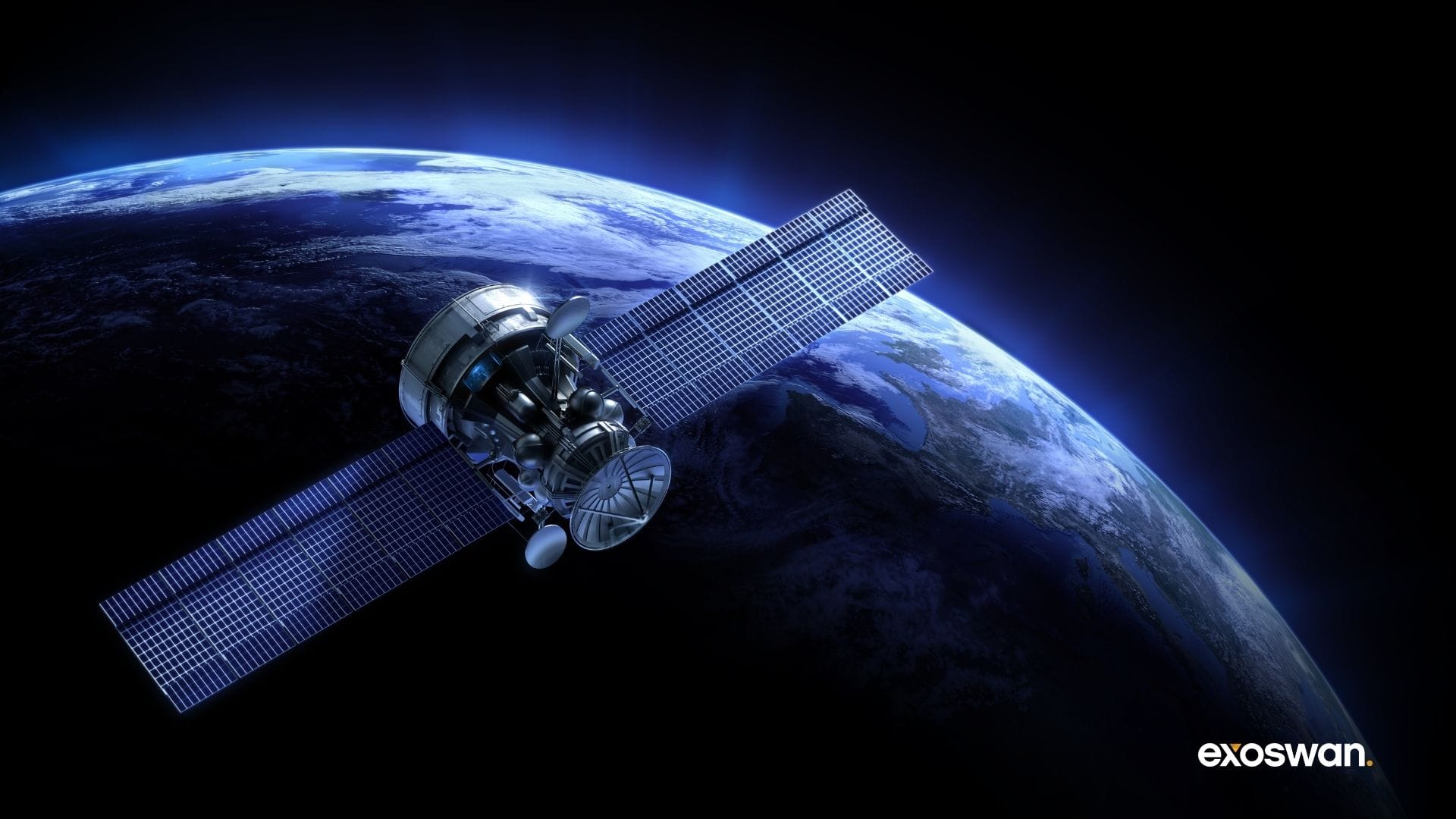
Launch Services
The launch market is the front door to the entire space economy. Nothing happens in orbit until someone can get you there.
SpaceX has had a near-monopoly on this front door for the better part of a decade. Its Falcon 9 is the most-flown orbital rocket in history, and its cost advantage—driven by routine booster reuse—has made it nearly impossible for competitors to win on price alone.
That dominance is why governments, defense agencies, and commercial constellation operators are actively funding alternatives. The U.S. Space Force's NSSL Phase 3 program, the Space Development Agency's satellite buildout, and the sheer volume of planned private sector mega-constellations all depend on having more than one reliable ride to orbit.
This year, at least five new medium-lift reusable rockets are targeting first flight or early operations, the most competitive launch market in history.
- SpaceX (Private; IPO expected mid-2026) is the gravitational center of this entire thesis. The company reportedly generated $15–16 billion in revenue in 2025 with an estimated $8 billion in profit, making it one of the most profitable private companies on Earth. Its Falcon 9 captured roughly 84% of U.S. launches in 2024. But the real story is twofold: Starship, the most powerful rocket ever built, and Starlink, the satellite broadband network that funds everything else. SpaceX is reportedly targeting a mid-2026 IPO at $1.5 trillion or higher, which would be the largest public offering in history. Its February 2026 merger with Musk's xAI touted aspirations of orbital data centers. Whether those aspirations are visionary or fanciful, the underlying business is generating plenty of cash.
- Rocket Lab (Nasdaq: RKLB) is the most credible public proxy for SpaceX. It posted record revenue of $602 million in 2025 (up 38% YoY), flew 21 missions at a perfect success rate, and grew its backlog to $1.85 billion—anchored by an $816 million contract to build 18 missile-warning satellites. The critical catalyst ahead is Neutron, a reusable medium-lift rocket designed to compete with Falcon 9. A tank failure in January pushed first flight to Q4 2026, the third schedule slip. But Rocket Lab is no longer just a rocket company. Its space systems business (reaction wheels, solar cells, star trackers, flight software) already generates more revenue than launch. It's becoming an aerospace conglomerate.
- Firefly Aerospace (Nasdaq: FLY) went public in August 2025 at $45 per share and promptly saw its stock cut in half after a rocket stage exploded during testing. But 2026 is shaping up as a redemption story: record 2025 revenue of $160 million, 2026 guidance of $420–$450 million (80% already booked), a successful return to orbit in March, and a $1.4 billion backlog bolstered by its $855 million acquisition of SciTec, which plugs Firefly directly into the Golden Dome missile-defense architecture. Still deeply unprofitable, with an active class-action lawsuit over IPO disclosures. High risk, high optionality.
Satellite Communications
The largest near-term addressable market in space is connectivity. Starlink proved the model: a constellation of low-Earth-orbit satellites can deliver broadband to anyone, anywhere.
That success has kicked off a race to extend the same logic to cellular service, connecting ordinary smartphones directly from space, without towers. The prize is enormous: roughly half the world's population still lives outside reliable cellular coverage.
- AST SpaceMobile (Nasdaq: ASTS) is building a space-based cellular broadband network that connects directly to ordinary smartphones. The company has commercial agreements with over 50 mobile operators representing nearly 3 billion subscribers, including AT&T, Verizon, and Vodafone. The company is targeting 45–60 satellites in orbit by year-end 2026, which would enable continuous service across the U.S., Europe, and Japan. With over $1.2 billion in contracted revenue and $3.9 billion in cash, the balance sheet supports the build. But at a market cap north of $30 billion, the stock prices in near-flawless execution. Deployment delays or competitive encroachment from SpaceX could compress that premium quickly.
Earth Observation & Data
Space is the ultimate vantage point, and this market has undergone a quiet revolution. A decade ago, satellite imagery meant waiting days for a single high-resolution photo from a government-owned bird. Today, commercial constellations image every landmass on the planet daily, at resolutions sharp enough to count cars in a parking lot.
Customers range from the NGA and NATO to commodity traders and insurance underwriters. The shift from selling raw imagery to selling AI-driven analytics is where the margin expansion lives.
- Planet Labs (NYSE: PL) operates the largest fleet of Earth-imaging satellites in history, with over 150 active spacecraft scanning every landmass on the planet daily. The inflection point is its next-generation Pelican constellation: high-resolution, AI-enabled imaging with onboard NVIDIA chips for edge compute. The company has reported record full-year revenue of $308 million (up 26% YoY), with Q4 accelerating to 41% growth. Backlog surged 79% year-over-year to $900 million, driven by a $230 million satellite services deal with SKY Perfect JSAT, new contracts with the Swedish Armed Forces and NATO, and selection for the NGA's Luno B intelligence program. Planet also announced Project Suncatcher with Google to explore AI computing in orbit.
- BlackSky Technology (NYSE: BKSY) occupies a related but distinct niche: real-time, on-demand satellite tasking with AI-driven analytics, tailored to defense and intelligence customers. Its new Gen-3 constellation delivers 35-centimeter very-high-resolution imagery and achieved general availability in March 2026 after rapid commissioning of four satellites. Record 2025 revenue of $107 million, backlog up 32% to $345 million, and growing international demand—including an eight-figure sovereign intelligence contract. Smaller and riskier than Planet, but with a sharper defense edge.
Lunar & Deep Space Infrastructure
NASA's Artemis program aims to return astronauts to the lunar surface by 2028, but the real economic story is what gets built around the missions: landers, rovers, communication relays, navigation networks, and eventually habitation.
The agency has deliberately structured this work as commercial contracts, making the companies winning these awards recurring revenue businesses. Meanwhile, the International Space Station is scheduled for deorbit by 2030, and NASA is funding commercial replacements.
- Intuitive Machines (Nasdaq: LUNR) returned the United States to the lunar surface in 2024 (uncrewed), the first American soft landing since Apollo 17, and did it again at the south pole in 2025. Its $800 million purchase of Lanteris Space Systems, completed in Q1 2026, converts it from a lunar lander company into a vertically integrated prime contractor spanning low Earth orbit to cislunar space. The company is guiding for $900 million to $1 billion in 2026 revenue with combined backlog of ~$943 million, and is a frontrunner for NASA's Lunar Terrain Vehicle contract (total value: $4.6 billion).
- Voyager Technologies (NYSE: VOYG) IPO'd in June 2025 and is the parent company behind Starlab, a privately funded commercial space station being built to succeed the International Space Station. Starlab has completed its Critical Design Review with NASA and targets deployment later this decade. Voyager's defense segment, propulsion and rocket motors, grew 63% in Q4, positioning it for Golden Dome and other national security programs. Still unprofitable, but with over $700 million in liquidity and a bet that post-ISS habitation and defense propulsion will converge.
Defense & National Security Space
Modern warfare depends on space. GPS-guided munitions, missile-warning satellites, secure communications, real-time surveillance—all of it runs through orbit.
And the threat environment has shifted. China's demonstrated ability to destroy satellites, Russia's GPS-jamming operations in Ukraine, and the broader pivot to great-power competition have forced the Pentagon to rethink its architecture. Instead of a few large, exquisite, irreplaceable satellites, the Space Development Agency is building hundreds of smaller, cheaper, networked birds that can absorb losses and keep functioning.
Golden Dome—the Trump administration's missile-defense initiative—layers space-based sensors on top. NATO members are following suit.
- Karman Holdings (NYSE: KRMN) IPO'd in February 2025 and manufactures mission-critical hardware for rockets, missiles, and spacecraft. While it doesn't design the mission, its components are inside everything that flies. Record Q3 revenue of $122 million (up 42% YoY), funded backlog of $758 million, and—unlike many space IPOs—Karman is already profitable.
- Kratos Defense & Security Solutions (Nasdaq: KTOS) builds the satellite ground systems, unmanned drones, and missile defense components that form the connective tissue of military space infrastructure. Consolidated backlog of $1.5 billion.
- L3Harris Technologies (NYSE: LHX) manufactures engines, propulsion systems, and components for nearly every major U.S. rocket and missile program. Less visible than the launch providers, but embedded in the hardware stack that makes everything else possible.
- Redwire Corporation (NYSE: RDW) operates at the intersection of in-space manufacturing, satellite components, and defense payloads. Recently awarded a prime contract by Belgian Defence to build Belgium's first national security satellite, a sign of the growing NATO space procurement wave.
- Lockheed Martin (NYSE: LMT) needs little introduction, but its space segment deserves specific attention: roughly $13 billion in annual space revenue, the Orion spacecraft for Artemis, GPS III satellites, and classified sensor programs. Its 2024 acquisition of Terran Orbital (formerly NYSE: LLAP, now delisted) added robotic smallsat manufacturing at scale. For investors seeking space exposure without startup risk, Lockheed is the ballast.
Private Bellwethers
The 2025–2026 cycle has already produced a wave of space IPOs (Firefly, Voyager, Karman), and the anticipated SpaceX listing could pull several more private companies into the public markets. In the meantime, these three represent distinct, high-conviction bets on the future of the industry.
- Relativity Space ($4.2 billion valuation; now led by former Google CEO Eric Schmidt, who took a controlling interest in March 2025) is building Terran R, a reusable medium-to-heavy-lift rocket targeting first launch in late 2026. The company has over $2.9 billion in launch contracts across SES, Intelsat, OneWeb, NASA, and the Space Force. Relativity's thesis is manufacturing disruption: 3D-printed structures that slash parts and production time.
- Stoke Space (~$1.95 billion implied valuation; backed by Breakthrough Energy Ventures) is pursuing the holy grail: full rocket reusability, both first and second stage. It raised $510 million in October 2025 to activate Launch Complex 14 at Cape Canaveral and is targeting first flight of its Nova rocket in 2026.
- Loft Orbital (~$609 million implied valuation) is the "space-infrastructure-as-a-service" play. Rather than building your own satellite, you book payload slots on Loft's shared spacecraft. Over $500 million in client bookings and partnerships with Microsoft, Honeywell, and the French government.
Signals to Watch
For those tracking space technology stocks, here are the near-term catalysts that matter:
- The SpaceX IPO. If it materializes at anywhere near $1.5 trillion, it becomes a rising tide that re-rates every public space stock. Even the anticipation is pulling generalist capital into the sector.
- Neutron's maiden flight. Rocket Lab's entire medium-lift thesis hinges on this rocket flying successfully. The stock dropped 10% on the latest delay; a successful flight would likely trigger the inverse.
- AST SpaceMobile's launch cadence. The company needs roughly one mission every one to two months to reach 45–60 satellites by year-end. Each deployment de-risks the revenue ramp.
- Defense budget execution. The SDA constellation, Golden Dome, and NATO space commitments are creating a procurement supercycle. Companies with existing defense contracts have visible, multi-year revenue floors.
- The orbital compute narrative. SpaceX's plan to build data centers in space sounds like science fiction and Morningstar assigns zero revenue to it in their valuation model. But the narrative is already pulling investment into the enabling stack: launch services, radiation-tolerant electronics, optical communications, in-orbit power.
- The medium-lift horse race. Neutron, Terran R, Nova, Eclipse, New Glenn—at least five reusable rockets are targeting first flight or early operations in 2026–2027. The market only needs two or three winners. Watch who books repeat contracts from the same customer.
- The ISS transition. The International Space Station is scheduled for deorbit by 2030, and NASA is funding commercial replacements. Voyager's Starlab, Vast's Haven-1, and Axiom's station modules are all competing for what will become a multi-billion-dollar market. Design milestones in 2026 will begin separating contenders from pretenders.
The space economy spent its first sixty years as a government program. It spent the last decade becoming a startup ecosystem. It’s now becoming what it was always destined to be: infrastructure, with defense budgets, commercial broadband, and AI demand providing the structural pull.