
There's a popular version of how paradigm shifts work. It goes like this: a brilliant inventor creates a killer product, the world recognizes its genius, and adoption takes off like a hockey stick.
It's a satisfying story. It's also wrong in one critical respect.
The inflection—the moment a technology shifts from possible to inevitable—almost always arrives before the product that makes it famous. Often years before.
If we wait for the killer app, we’re buying the inflection at a markup.
ChatGPT Didn't Start in November 2022
Ask the average Joe when AI became real, and he’ll say November 30, 2022, the launch of ChatGPT. It was indeed the fastest consumer adoption in history, reaching 100 million users in just two months.
Even so, the true inflection for AI and LLMs came many years earlier.
In May 2016, Google CEO Sundar Pichai stood on stage at Google I/O and revealed that the company had been running a custom chip called the Tensor Processing Unit (TPU) inside its data centers for over a year.
The TPU was purpose-built for one thing: accelerating the matrix multiplication operations at the heart of neural network training and inference.
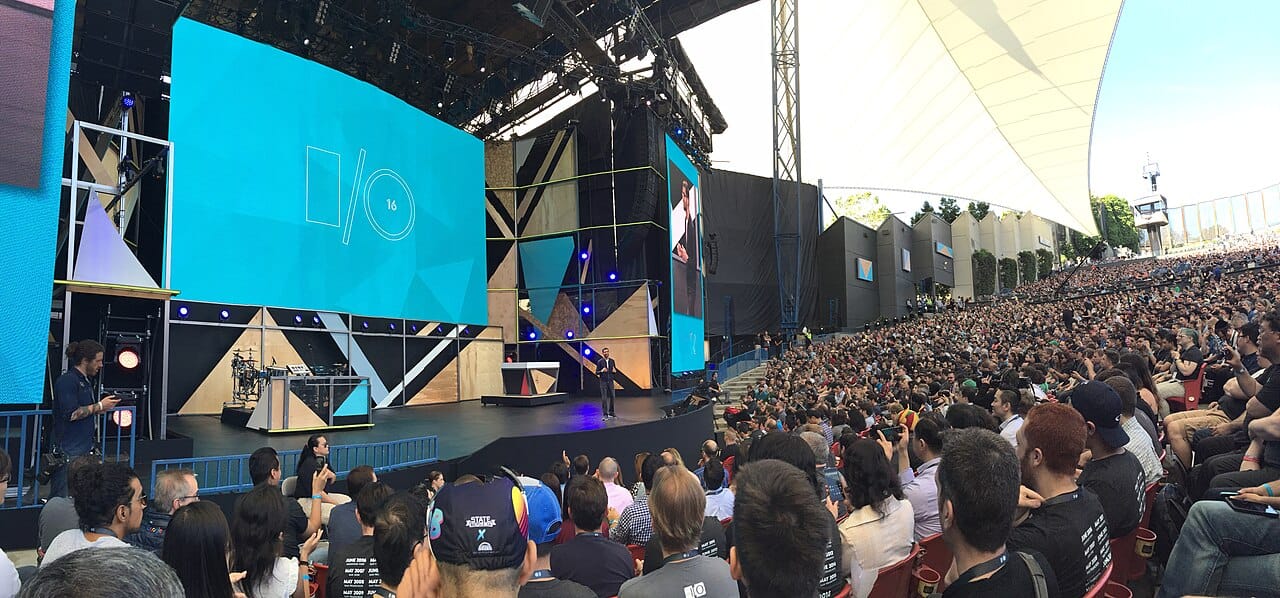
Google disclosed that the chip delivered 30 to 80 times better performance-per-watt than conventional CPUs and GPUs on machine learning workloads. The company had already deployed TPUs at scale across Search ranking, Street View, and AlphaGo.
Google had been quietly rebuilding its computing infrastructure around AI.
Financial press covered it as a hardware story. It was actually a declaration: the economics of AI now justified designing silicon from scratch.
Then, in June 2017, a team at Google Brain published "Attention Is All You Need," introducing the transformer architecture. This time, the paper didn't even make mainstream news.
Within two years, using that same transformer architecture, OpenAI trained GPT-2. Within four years, GPT-3 demonstrated emergent capabilities. ChatGPT officially launched in 2022, five years after the transformer paper—and six years after Google showed its hand with TPUs.
During that entire window, companies building AI's infrastructure were hiding in plain sight. Nvidia was selling the GPUs. TSMC was fabricating the chips. Arista was laying out the networking. The stocks moved, but mainly on legacy narratives. The AI thesis was still a footnote for most of that period.
A Cost Curve Is Worth a Thousand Analyst Reports
If there's one chart that best illustrates how inflections work, it's the price of lithium-ion battery cells over time.
In 2010, the average cost of a lithium-ion battery pack was about $1,474 per kilowatt-hour (inflation-adjusted), according to BloombergNEF's annual survey. At that price, an electric vehicle with 300 miles of range required a battery pack costing well over $35,000—before you built the rest of the car around it.
Mass-market EVs were a thermodynamic possibility but an economic impossibility.
By 2015, the cost had fallen to approximately $475 per kWh. Still expensive, but the trajectory was unmistakable: a roughly 68% decline in five years, driven by manufacturing scale, cathode chemistry improvements, and process engineering.
Here's where it gets interesting.
Industry analysts at the time pegged $150 per kWh as the threshold at which electric vehicles would reach cost parity with internal combustion engines on an unsubsidized basis. That estimate reflected the bill-of-materials math: at $150/kWh, an automaker could build a 250-mile EV at roughly the same cost as a comparable gas-powered sedan.
The battery cost curve crossed that line around 2023. BloombergNEF's 2023 survey recorded an average pack price of $148 per kWh.
But the inflection—the moment it became inevitable that batteries would reach this price—was visible years earlier. By 2016 or 2017, the learning rate was established: every doubling of cumulative manufacturing volume was driving costs down by roughly 18 to 20 percent.
The people with the most at stake were already acting on it.
In 2014, Tesla broke ground on its Gigafactory outside Reno, Nevada—a $5 billion bet that battery demand would scale by orders of magnitude. Tesla wasn't building capacity for existing demand. It was building capacity for the demand the cost curve implied was coming.
Then, in 2017, Volkswagen committed $50 billion to electrification and EVs. The world's second-largest car manufacturer had looked at the same cost curves and reached the same conclusion.
When that announcement dropped, Tesla was trading at under $25 per share (split-adjusted).
Why the Inflection Feels Like Nothing
Here's the paradox: the moment of greatest acceleration in a technology's trajectory often coincides with the moment of greatest boredom in its stock price.
During the Footnote stage, a technology attracts early believers and speculative enthusiasm. Some of that gets priced in. Then reality sets in. Production ramps stall, revenue flatlines, and the story gets stale.
The stock enters a purgatory—too well-known to be a discovery, too unproven to be a conviction. Gartner calls this the "Trough of Disillusionment," though we find that framework too clean. The real issue isn't disillusionment. It's attention allocation.
Institutional investors have finite bandwidth. They cover the stocks that generate trading commissions and banking fees today. A company in the inflection stage generates neither. It's too small for the large-cap growth funds, too unprofitable for the value funds, too established for venture-style crossover funds. It falls between the cracks of every institutional mandate.
Meanwhile, the technology keeps improving. Key breakthroughs de-risk the science behind it. Quiet partnerships build an alliance behind it. The cost curves keep bending.
But nobody is being paid to notice.
Amazon between 2000 and 2003 is the starkest example. After the dot-com crash, the stock fell from a split-adjusted high near $5.65 in late 1999 to under $0.30 by September 2001. The narrative was simple: money-losing online retailer, running out of cash.
What that narrative missed was everything happening inside the company. AWS was being conceived. Fulfillment infrastructure was being built. The third-party marketplace was launching. The foundations that would make Amazon one of the most valuable companies in the world were being laid during the exact period when the stock was most despised.
By the time the killer apps emerged—Prime in 2005, AWS as a public service in 2006, the Kindle in 2007—the inflection had already done its work.
The boredom was the setup.
Reading the Inflection in Real Time
Every frontier technology is unique. But there are identifiable signatures shared across many.
The cost curve speaks.
A sustained decline in the cost of a core enabling technology is one of the clearest inflection signals. The table below shows four enabling technologies, each on its own learning curve, each making an entire class of downstream applications inevitable.
Sources: BloombergNEF (batteries, 2025 survey); IRENA & pvXchange via Our World in Data (solar); NHGRI & Complete Genomics (sequencing); Epoch AI (AI compute hardware trends)
At the inflection cost: Tesla broke ground on its Gigafactory when batteries were still ~$700/kWh (inflation-adjusted). Google designed custom silicon when general-purpose chips were still "good enough." Illumina's $1,000 genome opened clinical sequencing years before CRISPR therapies reached the FDA. The inflection cost is where the asymmetry was greatest—and where consensus attention was lowest.
The talent migrates.
When top-tier researchers begin leaving established institutions for a specific domain, it means the people closest to the science believe a threshold has been crossed. In 2013 and 2014, a wave of leading AI researchers left academia for Google, Facebook, and Baidu. Yann LeCun joined Facebook as Chief AI Scientist in late 2013. Press covered it as a hiring story. It was an inflection signal—the best minds in the field had concluded that the technology was ready for prime time.
Pick-and-shovel demand inflects.
Before the killer app arrives, companies supplying infrastructure for the new paradigm see demand that doesn't fit their legacy business. Nvidia's data center revenue grew from $339 million in fiscal year 2016 to $2.98 billion in fiscal year 2020—nearly 9x—before ChatGPT existed, before "generative AI" entered the lexicon, and while most analysts still classified the company as a gaming stock.
The Killer App Gets the Headlines. The Inflection Gets the Returns.
In Stage 1, we explained why "wait for proof" is the costliest heuristic in frontier investing. Here, we can put numbers to it. Let’s look at the timelines for two recent technologies that already undergone their inflections.
Timeline of Artificial Intelligence
The stock rose roughly 8x between January 2020 and August 2023, before the proof quarter. The majority of the paradigm-shift return accrued before and during the inflection, not after it.
Timeline of Electric Vehicles
Tesla went from ~$20 to ~$240+ (split-adjusted) between early 2019 and early 2021. The affordable long-range EV was still years from mass scale. The inflection, not the product, drove the re-rating.
What these timelines share
In both cases, the inflection window lasted roughly five to seven years. During that window, the stocks were priced on legacy narratives. The proof that consensus investors wait for—a revenue blowout, a product with mass adoption—arrived after the majority of the return had already accrued.
This presents an uncomfortable choice.
Investing during the inflection means sizing positions on the strength of a technical trajectory rather than a financial statement. It means focusing on the infrastructure layer and the picks-and-shovels.
Most importantly, it means staying patient. Don’t expect victory-lap quarters yet.
Here, the single greatest risk isn't being wrong about the technology. It's being right about the technology—and selling too early because nothing seemed to be happening.